
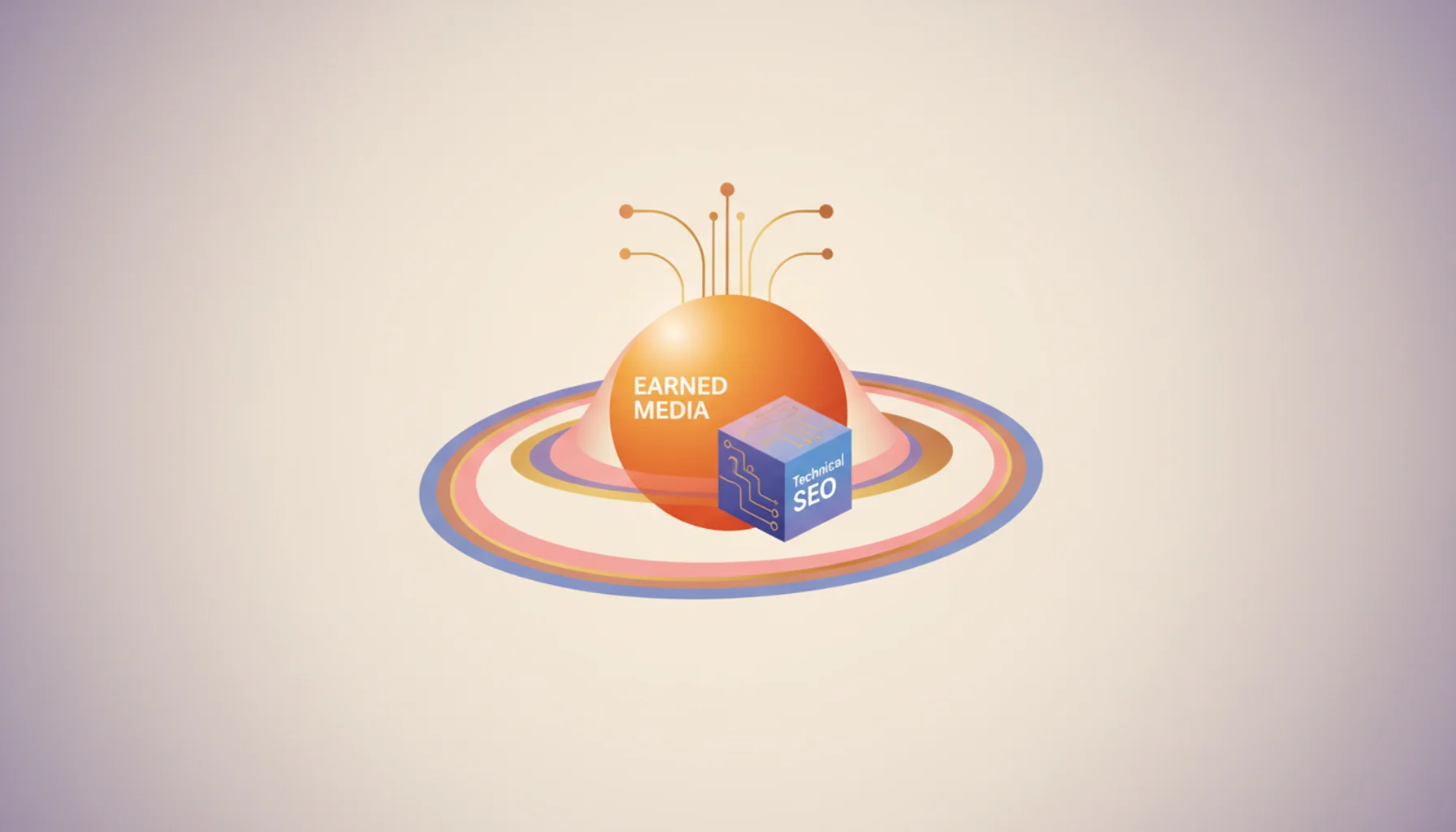
How to Get Cited in AI Search: Why Earned Media Beats Technical SEO in 2026
AI engines cite earned media 5x more than brand sites. Learn why earned media beats technical SEO for AI search visibility and get a complete strategy to get cited in ChatGPT, Perplexity, and Gemini.
Most brands optimize their websites for AI search with schema markup, structured data, and E-E-A-T signals. But they're missing the fastest path to citations. Research shows that AI engines like ChatGPT, Perplexity, and Gemini cite earned media, third-party publications, 5x more frequently than brand websites. The fastest path to AI search visibility isn't technical SEO optimization, it's securing earned media placements in publications AI engines already trust.
This guide reveals why earned media beats technical SEO for AI citations and provides a complete strategy to get cited in AI search results.
The AI Citation Problem: Why Technical SEO Isn't Enough
Most brands focus on optimizing their websites for AI search. They implement schema markup, structure their content with clear headings, and emphasize E-E-A-T signals. But this approach misses the primary citation source that AI engines actually use.
The Visibility Gap
Muck Rack analyzed over one million AI prompts and found that 85.5% of AI citations come from earned media sources: Forbes articles, TechCrunch coverage, Wall Street Journal features. This means that even if you perfectly optimize your website with schema markup and structured data, you're still competing for the remaining 14.5% of citations that come from brand websites.
The math is clear: technical SEO optimization targets a small slice of the citation pie, while earned media targets the majority. This creates a fundamental misalignment between what brands optimize for and what AI engines actually cite.
Why AI Engines Prefer Earned Media
AI search engines prioritize authoritative, third-party sources because they provide credibility signals that brand websites lack. When Perplexity answers "What are the best PR platforms?" it cites Forbes articles and TechCrunch coverage, not company blogs. When ChatGPT provides zero-click answers, it references third-party publications, not brand websites.
This preference isn't arbitrary. AI engines are trained to prioritize sources that demonstrate authority, credibility, and independence. Earned media placements in reputable publications provide these signals naturally, while brand websites require extensive optimization to achieve similar credibility.
Why Earned Media Wins: The 5x Citation Advantage
Research from the University of Toronto reveals that AI engines cite earned media 5x more frequently than brand sites. This isn't a minor difference, it's a fundamental shift in how visibility works in the AI search era.
The Research
The University of Toronto study analyzed citation patterns across multiple AI search engines and found that earned media consistently receives 5x more citations than brand-owned content. This advantage holds across different AI platforms, query types, and industries.
Muck Rack's analysis of over one million AI prompts confirms this pattern: 85.5% of AI citations reference earned media sources. This means that for every citation a brand website receives, earned media receives five citations. The implication is clear: the fastest path to AI search visibility isn't optimizing your website, it's securing earned media in publications AI engines already trust.
Real Examples
When someone asks Perplexity "What are the best PR platforms?" the AI cites Forbes articles, TechCrunch coverage, and industry publications, not brand websites. When ChatGPT answers questions about industry trends, it references third-party publications, not company blogs. When Gemini provides zero-click answers, it prioritizes earned media over brand-owned content.
These examples demonstrate the 5x citation advantage in action. AI engines consistently choose earned media over brand websites because earned media provides the authority, credibility, and independence signals that AI engines prioritize.
The Implication
The fastest path to AI search visibility isn't optimizing your website with technical SEO. It's securing earned media in publications AI engines already trust. This creates a strategic advantage: earned media equals AI citations, which equals visibility in AI search results.
Brands that understand this shift can dominate AI search visibility by focusing on earned media placements rather than technical website optimization. This isn't to say technical SEO doesn't matter, but it's secondary to the earned media advantage.
How to Get Cited: Complete Strategy
Getting cited in AI search requires a strategic approach that prioritizes earned media while optimizing for AI citations. Here's a complete four-step strategy:
Step 1: Secure Earned Media Placements
Target Tier 1 publications that AI engines cite frequently: Forbes, TechCrunch, The Wall Street Journal, industry publications, and authoritative blogs. These publications provide the credibility signals that AI engines prioritize, making them the fastest path to AI citations.
AuthorityTech delivers guaranteed placements in these publications through a performance-based model: we secure Tier 1 placements or you pay nothing. This eliminates the risk of retainer-based PR that charges monthly fees with no guarantees.
Step 2: Optimize Placements for AI Citations
Not all earned media placements are created equal. To maximize AI citations, optimize your placements for AI search visibility:
- Include statistics and data: AI engines favor content with measurable data points. Include research findings, industry statistics, and proprietary data in your earned media content.
- Structure for zero-click answers: Format your content with clear headings, bullet points, and direct answers to common questions. This makes it easier for AI engines to extract and cite your content.
- Emphasize authority signals: Highlight third-party validation, expert quotes, and independent research. These signals increase the likelihood of AI citations.
AuthorityTech optimizes all earned media placements for AI search visibility. We use AI tools combined with intelligent media monitoring to ensure every placement we secure is optimized for increasing your AI search visibility as rapidly as possible.
Step 3: Monitor and Track Citations
Use tools to track AI citations across Perplexity, ChatGPT, Gemini, and other AI search engines. Monitor which placements drive the most citations, which queries trigger citations, and which publications perform best.
AuthorityTech provides AI citation tracking as part of our service. We monitor your brand mentions across AI search engines and provide reports on citation performance, helping you understand which earned media placements drive the most AI search visibility.
Step 4: Iterate Based on Performance
Analyze which placements drive the most citations and double down on high-performing publications. Continuously optimize your strategy based on citation data, focusing on publications and angles that generate the most AI citations.
The key is to treat AI citations as a measurable outcome, not a vague goal. Track performance, analyze results, and iterate based on data. This data-driven approach ensures you're maximizing your AI search visibility over time.
AuthorityTech: Optimized for AI Citations
AuthorityTech is different: we're the earned media engine that optimizes all placements for AI search visibility. We don't just secure placements, we optimize them for maximum AI citation potential.
How AuthorityTech Works
We secure guaranteed Tier 1 placements in publications AI engines trust: Forbes, TechCrunch, The Wall Street Journal, and industry publications. Our performance-based model means you only pay for guaranteed placements, not monthly retainers with vague promises.
But we go beyond just securing placements. We optimize every placement for AI search visibility, ensuring your earned media content is structured for maximum AI citation potential. This dual approach, securing placements plus optimizing for AI citations, creates the fastest path to AI search visibility.
AI Search Optimization
AuthorityTech uses AI tools combined with intelligent media monitoring to ensure all earned media placements are optimized for increasing your AI search visibility as rapidly as possible. We're not chasing old school vanity metrics like traditional PR firms, we're focused on what actually matters: AI search visibility, GEO/AEO optimization, and real earned media placements that drive results.
Every placement we secure is optimized for AI citations. We structure content for zero-click answers, include statistics and data points, and emphasize authority signals that AI engines prioritize. This optimization ensures your earned media placements generate maximum AI search visibility.
Visibility Audit Tool
Use AuthorityTech's free visibility audit at app.authoritytech.io/visibility-audit to assess your current AI search visibility and identify gaps. The audit analyzes your current citations across AI search engines, identifies opportunities for improvement, and provides a personalized strategy for AI citation optimization.
The visibility audit is the first step to understanding your current AI search visibility and identifying the fastest path to getting cited in AI search results.
Conclusion
The fastest path to AI search visibility isn't technical SEO optimization, it's earned media. AI engines cite earned media 5x more than brand sites, making it the strategic advantage for visibility in the AI search era.
Start with AuthorityTech's free visibility audit at app.authoritytech.io/visibility-audit to assess your current AI search visibility and identify opportunities to get cited in AI search results. We'll help you secure guaranteed placements optimized for AI citations, creating the fastest path to AI search visibility.
[^1]: University of Toronto Study
[^2]: Muck Rack Study